Thursday, May 31, 2007

In Pompeii eat like it's A.D. 79 until June 26


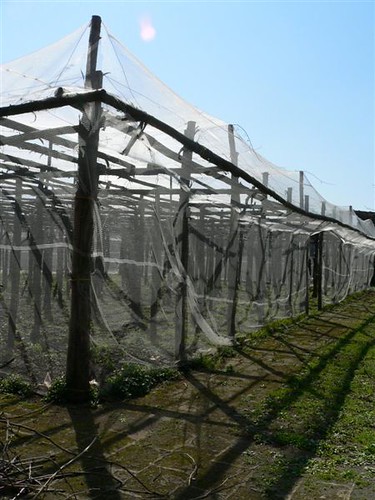
Researchers have tried to bring back to life the city's food chain by replanting, in the restaurant's garden and in other open spaces throughout the city's ruins, the fruits and vegetables that were part of the Roman diet -- figs and olives, plums and grapes, as well as broom, bramble, poppy and mallow.

Kits with the ingredients will be sold to visitors in the area around the restaurant with instructions on how to cook their own Roman specialties. Although there will be no cooking on the site, visitors will be directed to a local restaurant where some of the specialties will be offered.

"We wanted to learn what the inhabitants of Pompeii ate,'' said Anna Maria Ciarallo, a biologist who heads the project for Pompeii's archaeological office. "But we wanted a side of the project to appeal directly to the public as well.''

Some may keep away from "garum,'' a pungent sauce used for flavoring and obtained by fermenting fish entrails, but Ciarallo said that many Roman dishes closely resembled modern cuisine.

The recipe to make prosciutto ham has remained unchanged, while "savillum,'' the favorite dessert of many Romans, was a baked cream similar to today's custard, Ciarallo said.

Pompeii's rich were known to feast on such exotic dishes as swallow's tongue and parrot meat, but the project is presenting more everyday fare, Ciarallo said.

The restaurant was located between the gymnasium, the amphitheater and one of the city's gates and mostly catered to middle-class merchants and travelers, Ciarallo said.

Its six benches were probably always filled with hungry customers passing through the busy neighborhood, she said. The guests would recline on one side on the benches, as eating customs demanded at the time, to chat, play dice -- one of the Romans' favorite pastimes -- and partake of the dishes served out of large pots. The quiche-like "libum'' is made with bread, laurel leaves and cheese resembling today's ricotta.

"It was a sweet and sour cuisine, which blended the sharp tastes of vinegar and spices with the sugars of honey and figs,'' Ciarallo said. Cereals and beans were the staples of the Roman diet, together with fish, cheese and limited quantities of eggs and meat.


"The main differences were between the social classes,'' she said.

Slaves were kept on a high-energy diet of bread, dried-fruits and low quality cheese and wine. The upper classes enjoyed the same foods available to the middle class, but the quantities were larger, the ingredients finer, and the banquets were lavish presentations.

The project will shut down on June 26 because of lack of funds...

Some recipes prepared in ancient Pompeii:

Peaches with Cumin
Can be an appetizer or a dessert.
Peel and chop up some firm peaches
Cover peaches in a cumin sauce made with ground pepper, parsley, mint leaves, cumin, honey, vinegar and a dash of garum, which is a fish sauce made from fish entrails steeped in brine. A modern-day version of garum, "colatura di alici'' or anchovy juice, is still produced on the Amalfi coast.

Celery Dessert
Chop celery, roast the pieces in an oven.
Serve with honey and ground pepper.

Pork with Dried Figs and Cheese Side Dish
Boil a fresh pork shoulder with dried figs and bay leaves.
Carve off the rind, cover in pastry and bake in a hot oven.
For side dish, mix different types of herbs into fresh ricotta-like cheese, add some olive oil and serve with sesame seeds or hazelnuts.

-- Associated Press

Sunday, May 27, 2007

Pre-Roman thru Byzantine Period Wine Presses Found on Thassos


"Greek archaeologists have discovered a complex of ancient farmhouses and large wine-presses [similar to the Greco-Roman press pictured at left] on the northern Aegean island of Thassos dating from before the Roman period until late Byzantine times, the culture ministry said Wednesday [May 23, 2007].

Built with walls of stone over a meter (three feet) high and lined with plaster, the wine-presses were found clustered on a mountain near the coastal village of Limenaria, at an altitude of 500 meters.

The remains of enclosures suggest the presence of large estates that shared the use of the wine-presses, the ministry said.

Though apparently inhabited mainly during the grape harvest, the site was in use from the Hellenistic period that followed the death of Alexander the Great in 323 BC onwards.

The local archaeological department has been researching the Thassos site for the past two years.

Also Wednesday, the ministry said that another archaeological team found the remains of a rural shrine to presumed fertility deities near the town of Orchomenos in central Greece.

The shrine had sustained damage in the construction of an irrigation canal in the 1950s, but the archaeologists found thousands of votive offerings, including miniature vessels, animal idols, scarabs, and lamps.

They also found rare clay replicas of flowers entwined with ears of corn, representing gifts left by faithful visiting the shrine.

In ancient times, citizens of Orchomenos are known to have worshipped the Three Graces, daughters of Zeus said to represent beauty, charm, and joy but also associated with bloom."

I wish archaeological teams would take field photographers with them so digital images of new finds could be more readily available. The clay replicas of flowers entwined with ears of corn sound very beautiful. I would love to see a picture of them! Unfortunately, they'll probably end up in some museum or university storage compartment never to be seen by the general public or anyone else for that matter outside a handful of researchers.

Saturday, May 26, 2007

4th century Roman sarcophagus unearthed at St. Martin-in-the-Fields Church

Archaeologists have moved closer to bridging a 200 year gap in the ancient history of London.

New treasures unearthed at St Martin-in the-Fields church, off Trafalgar Square, provide evidence of a link between the Romans and the Saxons.

The finds from the church, which go on display at the Museum of London from tomorrow to August 8th, include a limestone sarcophagus with the human remains of a middle-aged Roman man.

The exhibition also features a kiln, dating from between 400AD and 450AD, for making tiles and a gold pendant and beads dating between 650AD and 670AD, believed to have been found in a woman's grave.

The Museum's curator Francis Grew said the stone coffin of the man, who died between 410 to 420AD, was a "hugely moving discovery".

He said: "At that time the Roman Empire was rapidly disintegrating and Britain was not really part of the Roman Empire.

"This is a hugely exciting discovery. His bones symbolise the end of the Roman world, the end of the ancient world."

Mr Grew said that the man - thought to have been a rich, highly esteemed member of society - would have lived through a fascinating period.

He said: "He probably just caught a glimpse of the people from Germany, the Saxons.

Tuesday, May 08, 2007

Herod Tomb may have been found at Herodium


An Israeli archaeologist on Tuesday said he has found remnants of the tomb of King Herod, the legendary builder of ancient Jerusalem, on a flattened hilltop in the Judean Desert where the biblical monarch built a palace. Hebrew University archaeologist Ehud Netzer said the tomb was found at Herodium, a site where he has termed the find a "major discovery by all means," but cautioned further research is needed.

He said all signs indicate the tomb belongs to Herod, but said ruins with an inscription on it were needed for full verification. "We're moving in the right direction. It will be clinched once we have an inscription that bears his name," said Pfann, a textual scholar who did not participate in Netzer's dig.

The fragments of carved limestone found at the sandy site are decorated with floral motives, but do not include any inscriptions. It has long been assumed that Herod was buried at Herodium, but decades of excavations failed to turn up the site until now. The first century historian Josephus Flavius described the tomb and Herod's funeral procession.

Herodium was one of the last strong points held by Jewish rebels fighting against the Romans, and it was conquered and destroyed by Roman forces in A.D. 71, a year after they destroyed the Second Temple in Jerusalem.

Thursday, May 03, 2007

Aeneas' Temple of Minerva found in Castro, Italy?


"Archaeologists at the University of Lecce have discovered that the modern town, with its 15th-century walls, sits on the ruins of the port that was the first landfall in Italy made by the semi-mythical wanderer of the ancient world, Aeneas. According to Virgil's epic, he fled Troy as the Greeks destroyed it and made his laborious way westwards finally to found a "new Troy", the imperial city of Rome.

In the third book of the Aeneid, according to John Dryden's 17th-century translation, the poet describes the hero's discovery of Italy thus:

"... And now the rising morn with rosy light

Adorns the skies, and puts the stars to flight;

When we from far, like bluish mists, descry

The hills, and then the plains, of Italy ...

The gentle gales their flagging force renew,

And now the happy harbour is in view.

Minerva's temple then salutes our sight,

Plac'd, as a landmark, on the mountain's height ..."

Minerva's temple is the key: the head of the Archaeology Department at Lecce University has found clinching evidence of the existence of a temple of Minerva, exactly where the poet describes it. "There is no doubt," Professor Francesco d'Andria said. "We have found fragments of a female divinity, and many iron weapons given to the goddess as offerings. In this temple a warrior goddess was worshipped. Minerva was worshipped."

Sunday, April 29, 2007

Roman settlement discovered at the base of Silbury Hill

Archaeologists have uncovered evidence of a new Roman settlement at the base of Silbury Hill in Wiltshire.

The 40m high man made hill appears to have been home to a large community, as a village the size of around 24 football pitches has been found.

Partially buried under the modern A4 road, the village consists of streets and houses and may have been a stopover for people travelling to the sacred springs in Bath.

Discovered during a geophysical survey as part of restoration work on the hill, the Roman settlement may also have been a pilgrimage site itself.

The largest prehistoric structure in Europe, 5,000-year-old Silbury Hill was certainly known to the Romans, as the ancient road from London to Bath swerved to avoid it.

Straddling the road alongside the Winterbourne River, the village appears to offer a stop off point for travellers and is laid out in typical Roman style, with evenly spaced streets and dwellings.

Ancient Roman Paintings found in London

The Roman artworks were found underneath an Italian restaurant in Lime Street, in the City of London.

Painted 1,900 years ago, the paintings depict goldfinch and lavish bunches of grapes, magazine London Archaeologist reports.

Experts believe that they were painted for a wealthy Roman's home, as the area around Lime Street used to the most prestigious address in Roman London.

Archaeologists are hailing the find as one of the most significant of recent decades and hope that the whole set of paintings, damaged in a building fire, can be reconstructed.

Saturday, April 14, 2007

Lincoln Roman aqueduct found to have provided decades of service


Archaeologists unearthing parts of an underground Roman aqueduct in Lincoln have found the first evidence that it was actually used, contrary to previous thinking.

The aqueduct, near Lincoln’s Nettleham Road, has been known about for centuries, and archaeological investigations of it were carried out in the 1950s and 70s, with no firm evidence for their ever carrying water being found. However, with the recent start of a housing development on the site, the time came for sections of the piping to be removed and studied thoroughly.

Excavations also revealed that a road thought to have been a Roman construction is in fact post-medieval.

Simon Johnson, principal archaeologist at Pre-Construct Archaeology, who carried out the work, explained that visible calcium deposits suggest the pipes did carry water.

“There’s been persistent questions over whether the aqueduct ever functioned,” he said. “We’ve got at least one section where there is furring around the full circumference, suggesting it was used. Who knows for how long? You’re looking at decades to produce that sort of deposit, I should think.”

Roman "Silver" pig to be sold at auction


I wonder if Lindsey Davis is going to bid on this "pig" to commemorate her first best selling Marcus Didius Falco mystery, "The Silver Pigs"?

"A 2000 year old lead ingot mined by the Romans shortly after they conquered Britain is expected to fetch up to £12,000 when it goes under the hammer this month.

The 154lb ingot, known as a 'pig', was mined by Romans in North Yorkshire, and would have been due to be made into piping of waterproof lining for roofs. Silver could also be extracted from it.

The Romans, who ran well organised mining operations in Britain and also produced silver and gold after invading the country in AD43.

Dating from AD81, the 11 stone pig bears a raised inscription on the top reading 'Imperatore Caesare Domitiano Augusto Consule Septimum’ - a reference to the Emperor Domitians seventh consulate.

Measuring 58.5cm by 10.5cm by 13.5cm, it has the word 'Brig' on the side - showing it came from the territory of the British Brigantes tribe, who had fallen under Roman rule.

The pig was discovered accidentally in 1731 in peat on Hawshaw Moor, which was famous in antiquity for its lead mines."

Bob Ballard to explore Byzantine Shipwrecks


Robert Ballard is known for discovering the Titanic shipwreck, but that's just skimming the surface of his career in undersea exploration.

Ballard has tracked down the ruins of several ships, including ancient wooden ones, and even found new life forms - 10-foot-long tube worms - deep below the ocean's surface.

However, Ballard considers his greatest achievement to be the educational programs he has developed to get young people excited about his work, the ocean and science in general.

This August, the world-famous underwater explorer-scientist, will excavate two Byzantine shipwrecks, which will be presented in streaming video online at immersionpresents.org. Ballard expects to find ships with perfectly mummified crews, who will look asleep rather than mummified in the Egyptian sense of the word.

He plans to create the first underwater museum, allowing the public to view these artifacts without having to remove them from their preserved state in the ocean.

Sunday, April 08, 2007

New Roman Glass exhibit at Hallie Ford Museum of Art


Willamette University graduate Richard Brockway wanted to be an archaeologist but ended up as an engineer.

But he never lost his first love. Over a 30-year period, he traveled to the Middle East, Asia and Europe, amassing a collection of antiquities that has led to a new exhibit at the Hallie Ford Museum of Art, "Ancient Glass: Selections from the Collection of Richard Brockway.

The works on view at Hallie Ford's Study Gallery are small but precious: drinking vessels, tableware, toiletry vessels, beakers and storage bottles from Egypt, the Near East, Greece and Rome, selected to demonstrate the evolution of glass artists' skill and mastery of glassblowing techniques.

Although not considered valuable in their own time, the works have amassed value over time.

"Everything in here is very functional, very utilitarian," Olbrantz said.

"These pieces would have been like our dishes, our pots and pans."

Still, these are among the earliest glass works in history, often simple but elegant in their shapes and speaking to us across thousands of years of history.

Little is known about the early years of glass, although by 2,500 BCE, solid glass beads and amulets were being made, and the oldest fragments of hollow glass vessels appeared in the 16th and 15th centuries BCE in Egypt and Mesopotamia.

At the beginning of the 18th century BCE, Egyptians developed a method for producing hollow glass vessels, making a core mold of compacted clay or dung and winding molten glass around it.

Among the notable pieces in the exhibit is a gleaming blue Ushabti from the New Kingdom. The tiny mold-cast work is a mummy-shaped figure meant to be placed in a tomb to do the work of the deceased in the afterlife. A complete collection would consist of 401, one for each day of the Egyptian year, plus 36 foremen.

A small but striking piece is the Eye of Horus, a mold-cast work of the late period, probably originally found on a statue or statuette of Horus, the falcon-headed god of Upper and Lower Egypt.

Among the Roman works is a large single-handed pitcher, from the first through third centuries CE, a work that Brockway has donated to the Hallie Ford Museum. The free-blown piece has an applied neck coil and handle.

Among the largest pieces is a Light Blue Cinerary Urn, a Roman work from the first through third centuries CE, a free-blown work.

The urn was used to hold cremated ashes but has transcended its mundane past to become a work of art visibly touched by the centuries.

A companion piece, also elegant and simple, is a light blue elongated storage vessel, a Roman work from the fifth to sixth centuries."

Roman-style Column found in newly discovered Han Dynasty Tomb


I noticed this short "photo-byte":

Archeologists excavate near a Roman-style column in a newly found Han Dynasty tomb (202 BC - 220 AD) in Xiao County, east China's Anhui Province, April 3, 2007.

Roman tomb on Greek Isle of Cephalonia yields glass, gold jewelry and coins

Greek archaeologists discovered a Roman tomb filled with glass, copper and gold artefacts and an amphitheatre on the island of Cephalonia, which they say must have been an important link between ancient Greece and Italy.

"It is the first time such a monument is discovered, not only in Cephalonia but in all the Ionian Sea islands," the culture ministry said in a statement on Wednesday.

The tomb, which included more than one grave, measures about 8 by 6 metres (yards) and included glass jars, clay pots, gold jewellery, copper items and coins, it said.

"It is a touching detail that the (stone) door still opens and closes to this day just as in antiquity," the ministry said.

The finds were revealed during digging for construction in the town of Fiscardo and the theatre, which extends underground beyond the lot, appears to be in excellent condition, the ministry added.

"From the finds so far, we see that Fiscardo was an important naval station between Greece and Italy in antiquity," it said.

In the past, archaeologists have found near the site a group of Roman urban dwellings - a paved open-air space surrounded by houses, a bath and a cemetery.

Classical Capitals for Modern Architecture

I noticed this article in an online business magazine. For any of us that may be looking for ways to incorporate our love of the classical world into our modern one, this company specializes in producing classical columns:

"The majesty and grandeur of ancient Roman architecture is brought to life with detailed decorative capitals. A profusion of carved acanthus leaves, egg and dart and volute scrolling details reproduced from Roman architecture, are beautifully captured in four distinct styles of Roman decorative column capitals from Timeless Architectural Reproductions™.

Presented in Scamozzi, Roman Ionic, Corinthian and Decorative Roman Doric styles of architecture, capitals are available in sizes from 6” to 30” in and in round, square and flat varieties*. Timeless Roman decorative column capitals can be painted, faux finished or gilded offering many design options not available when using other materials.

Virtually maintenance free the column capitals are impervious to insects and extreme weather conditions, they will not rot, split or crack and require a primer and coat of exterior or interior paint depending on the application.

Well known for their structural strength as well as their meticulous detailing that matches many classic styles of architecture, decorative capitals manufactured by Timeless are as functional as they are beautiful and exhibit the load-bearing capacity of the columns they adorn. Backed by a lifetime-limited warranty, Timeless decorative column capitals are finished with beautiful crisp detailing."

New Greek and Roman galleries at the Metropolitan Museum of Art to open April 20


This is not only exciting but extremely fortunate since I plan to visit the Metropolitan the first week in June on my way to a conference in Albany, NY. I didn't even realize that the galleries were being rennovated. I would have been devastated if they had been closed when I was there since they were one of the primary reasons I modified my intinerary to include four days in New York before traveling on to the site of my conference.

"The new Greek and Roman Galleries at the Metropolitan Museum of Art, which open April 20, suggest something about the limits of nostalgia trips.

At more than 30,000 square feet, the new series of 11 exhibition spaces continues the sequence of eight previously renovated galleries devoted to earlier Greek art, south of the Great Hall on the Met's first floor. (The earlier projects were completed between 1996 and 2000.) The $220 million cost includes renovations on the upper and lower floors that will eventually benefit the education and Islamic art facilities as well. Visitors can now systematically follow the developments in Greek and Roman art from the prehistoric, through the glories of classical Greece, into the Roman Empire at its height and toward its decline. Moreover, there is now space to display some 6,000 works that had previously been in storage.

Those familiar with the collection will also welcome back their own favorites, many of which have been absent from public view for some time. Mine is the Cubiculum from Boscoreale, near Pompeii and buried in the Vesuvian eruption of 79 C.E. It brings us amazingly close to the experience of being in a real Roman interior: a bedroom to match the elegance of the Met's neighbors across the street. Formerly incongruously set in a niche in the Great Hall, the room now relates to contemporaneous objects and paintings, including a pair of Odysseus frescoes. No later illustrations of Homer's tale can compete with that doleful one-eyed Polyphemus shown here."

Monday, March 19, 2007

Villa discovered in district frequented by Marcus Aurelius

The discovery of sections a Roman villa at Castel di Guido on the Via Aurelia, roughly 10 km outside Rome’s ring road has now been officially confirmed. The villa, which dates back to the second or third century AD, is part of a district called Lorium (la Bottaccia on a modern map), historically known as the first stop on the consular Via Aurelia, and where emperor Marcus Aurelius (121-180 AD) lived for a period.

So far, walls delimiting the thermal area of the villa have been uncovered, while the caldarium and fridigarium, the latter with an almost perfectly preserved and superbly decorated mosaic floor depicting Medusa heads at its four corners, a marble pool and nymphaeum, have been totally excavated.

Further excavations conducted by archaeologists from La Sapienza and Foggia universities who originally worked on the site, will begin again in July when it is hoped to discover the full extent and historical importance of the villa.

Hippodrome starting gate discovered at Colchester

THE final piece in the archaeological jigsaw that is Colchester's Roman Circus has been found by excavators, the EADT can reveal.

The location of the 12 gates that released the competitors into frenetic and often violent chariot races was discovered near the sergeants' mess building in the former Colchester Garrison at Abbey Field.

These would have operated in the same way as greyhound traps, unleashing the charioteers on to the quarter-mile long opening stretch of the track.

With four horses at the head of each chariot, on full races there would have been 48 steeds pounding around the circuit, which is the only one ever to be found in the UK.

Foundations of the circus were first located in late 2004 when archaeologists were conducting digs at Abbey Field, prior to the construction of new housing.

Masada fresco restoration project completed

"The frescoes on the Northern Massada Palace were discovered during extensive archaeological excavations headed by Prof. Ygael Yadin in the sixties. It was a very exciting find at the time, because these frescoes were cutting edge in Roman design, same as in Rome itself or in Pompeii."

Ze'ev Margalit, an architect for the Israel Nature and National Parks Protections Authority, observed, "For 40 years, the frescoes had been preserved through then-modern techniques, but they had deteriorated terribly over time to a point where they might have been utterly ruined."

Before the current project began, the paintings were removed from the walls, put on fiberglass slabs and returned after being sealed in glass to protect them.

"This preservation technique turned out to be disastrous. The damage sustained during the past 40 years has been greater than that of the previous two millennia. The frescoes were crumbling," Margalit recounts.

To save the frescoes of the Northern Palace, the INNPPA launched the restoration project three years ago with funding from the ministries of finance, environment, tourism, industry, trade and education. The Israeli UNESCO (United Nations Education, Scientific and Cultural Organization) committee also participated in the project, along with the Dead Sea Water Authority. The Antiquities Authority then issued an international tender that resulted in Tagliapietra's involvement.

After much deliberation, the archaeologists decided not to return the ruined frescoes to the site after they had been restored. "This wasn't an easy decision," says Margalit. "In renovation projects we always prefer to keep the articles at the original site, but the damage was just too extensive."

The frescoes were put into a special renovation laboratory built at the bottom of the Massada complex. Most are to remain in the new museum built at the site, which will soon be opened to the public. However, some of the frescoes were returned to the palace's southern wall, which is less exposed to damaging sunlight.

"We decided to replace the frescoes removed from the palace with replicas in order to return the color into the palace," says Orit Borbnik, conservation manager at the INNPPA. "These are exact copies prepared with the same techniques that were used on the original pieces during the times of Herod the Great," she adds.

At the start of the renovation process, the wall was perfectly aligned and then coated with several layers of whitewash. Then, rough plaster was applied and completed with a final layer of fine plaster. The frescoes were then drawn on the finest layer while the plaster was still moist, so the color would be fixed into it.

"This is how the color survives for 2,000 years," explains Margalit. The patterns themselves were sketched out on the walls by Tagliapietra using pieces of string to outline the borders of the fresco.

The paint was prepared from the same products used for the original painting. Yellow, for example, came from semi-solidified egg yolk. Earth, milk, resin and other natural pigments were used to produce other colors.

Leeds building "Scent of Rome" garden

A CORNER of Ancient Rome is being lovingly recreated in Leeds as the centrepiece of a special garden. Expert stonemasons are busy chipping away at Leeds City Council's nurseries at Red Hall to lay the foundations for the city's Roman-themed entry to this year's Chelsea Flower Show.

The council's Scent of a Roman entry draws its inspiration from archaeological and historical evidence that Leeds was home to a Roman settlement.

Locally-sourced materials have been used to reconstruct Roman splendour in West Yorkshire.

The design relies on both the hard features and the plants to appear mature, with particular emphasis on the paths, columns. stonework, mosaic and altar.

One of the key features of the garden will be a stone grotto, which will draw the visitor towards a seeping, mossy wall. Within this will be a Yorkshire stone altar, used for worship and prayer.

The design includes plant species that were introduced to Britain by the Romans for their scent and for their uses in cooking and medicine. Other native Yorkshire species will be interspersed with the Roman plants.

Saturday, February 10, 2007

Roman era beam with 1st millenium-style iconography discovered near Karnak


The child gods of ancient Egypt are depicted in a surprisingly real-world way on a stunningly well-preserved, gilded beam recently found at the Temple Precinct of the Goddess Mut in South Karnak, Egypt.

The structure once crowned the doorway of a birthing house inside the temple more than 2,000 years ago. Rituals associated with royal childbirths — perhaps even including "honeymoon nights" — likely took place there.

The beam is significant because of "the quality of its carving and its gilding," said Brooklyn Museum archaeologist Richard Fazzini, who is leading the excavation, in a press release.

"Equally important is the unusual nature of its iconography, which has its origins in the early first millennium B.C., but which is here dated to the Ptolemaic Period or early Roman Period (late fourth to late first century B.C.) by the inscriptions," he continued.

Fazzini is still at the dig, but Edward Bleiberg, curator of Egyptian Art at the museum, described the relief to Discovery News.

The left side shows five child gods sitting on lotus leaves. Each is sticking what looks to be an index finger in his mouth.

The gesture, common to depictions of children in ancient Egypt, could also represent thumb-sucking, but researchers aren't sure. Each child is also holding royal instruments like those found in King Tutankhamun's tomb.

The first and fifth gods are crowned with a disk and crescent that represent phases of the moon. The other gods are forms of the solar deity Horus. All five wear blue capes, possibly symbolic of the sky, although much of the paint has eroded.