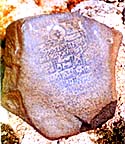
 "University of Southampton archaeologists Professor David Peacock and Dr Lucy Blue have just returned from a pioneering expedition investigating Roman sites in the East African country of Eritrea alongside colleagues from the University of Asmara. The University group is the first from the UK to work in the country since it won its independence more than a decade ago.
British involvement in the area has a long history. In 1868 General Napier landed his troops near Adulis in a daring bid to rescue British hostages held by Emperor Theodore at his fortress of Magdala, now in Ethiopia. Napier built a landing stage and a railway to transport troops and equipment to the interior, and traces still survive on the coast 6 km to the east of Adulis. Archaeologists from the British Museum, who accompanied the army, excavated a church at Adulis, which can still be seen in a ruinous state."
See also: Eritrea Ruins of History


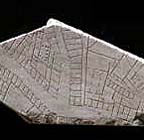 "It's the world's oldest and largest jigsaw puzzle - an ancient map of Rome in 1,200 fragments of marble. Archaeologists for centuries have tried to painstakingly piece together the sculpture, fragment by fragment. Now, computer wizards at Stanford University say they have created a software program that holds the key to the puzzle and the ancient city.
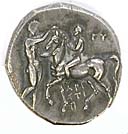 "Yale University Art Gallery has acquired a collection of 4,100 coins of Greek and Roman origin. The collection was established over a period of forty years by Peter R. Franke, formerly Professor of Ancient History and Numismatics and head of the Institute for Ancient History at the University of Saarbrucken, Germany. Franke was mentor to many of the numismatists on staff at various collections throughout Europe, and taught until recently at the Institut fur Numismatik in Vienna. He is well-known as the author of a number of specialized monographs as well as introductory treatments of coinage. Although it covers the entire Mediterranean basin, the principal focus of the collection on Greek coins of the Roman period, which were produced at individual cities to meet local currency needs. "I am delighted that my collection has been acquired by Yale," said Professor Franke, "since I know that there the coins will be employed for teaching as well as research, and my work will be continued."
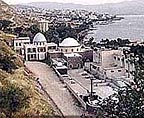 "From the vestiges of an old quarry, piles of rock, weeds, and a sewage treatment plant, a whole city will rise over the next 10 to 15 years. The theater will host performances, couples will stroll the main street, and the magnificent mosaics will be a sight for the sore eyes of visitors from afar. "
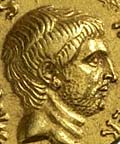
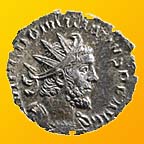 "A man with a metal detector has unearthed a Roman coin so rare it bears the face of a mystery emperor who ruled Britain for a matter of days.
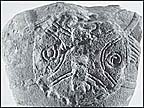 "A life-sized statue of a warrior discovered in southern France reflects a stronger cultural influence for the Etruscan civilization throughout the western Mediterranean region than previously appreciated.
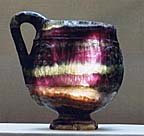 "A 50,000 pound grant from the Art Fund has helped the British Museum acquire an extremely rare Roman Fluorspar cup, from the 1st century A.D. The total cost was 150,000 pounds with additional funding from the British Museum Friends and Caryatid Fund.
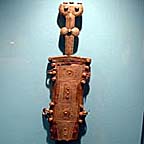 A Roman legionary dagger complete with sheath, 90 swords, over 30 Greco-Illyrian helmets, plus numerous items of jewellery, axes and spearheads have been uncovered in a continuing excavation of the Cetina Valley in Croatia.
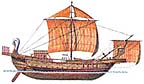 "Italian archeologists have discovered a Roman ship and hundreds of amphorae dating to the second century during excavation works for a new subway in the southern city of Naples.
 "Dr. Gideon Hadas has found a lead-and-wood anchor - without the lead - that probably dates back to the Roman period, 2,000 years ago. The anchor is 1.8 meters by 0.9 meters wide (6 by 3 feet), and weighs some 500 kilograms (1,100 lbs.). Many similar anchors from the Roman period have been found in the Mediterranean Sea area, but never has one been found in the Dead Sea, nor has one been found with the wood intact. This case is the opposite of all previous anchor finds: here the lead was eaten away by the salt, but the wood was preserved."
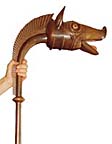 "John Kenny, a Scottish musicologist, was part of a team of scientists and musicians who resurrected the Pictish instrument known as the carnyx, a 2,000-year-old metal trumpet in the shape of a boar’s head which was used by ancient Scots in their battle against Roman invasion. "
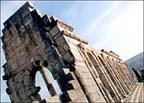 I see that Britain and Morocco have reached a conservation agreement for the ancient Roman site of Volubilius in Morocco.
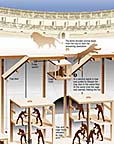 "The Colosseum in Rome was as sophisticated as a modern stage set, according to archaeologists who have calculated how an intricate system of gangplanks, trapdoors and levers was used to bring wild animals into the arena."
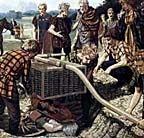 Archaeologists have discovered a “rare and nationally significant� Iron Age chariot buried for 2,500 years near West Yorkshire. The find is a complete chariot containing the skeleton of a tribal leader, with the remains of at least 250 cattle, probably slaughtered for the funeral feast. Chariot burial at the time – between 500BC and 400BC – was reserved for high-ranking figures from a tribe a tribe known as the Arras, who came to England from France.
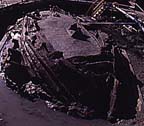 "The chance discovery of a Roman 'ghost fleet' buried in mud just outside Pisa has led experts to conclude that the city was built on a lagoon much like an early Venice. Archaeologists believe that traces of a community dating back to a pre-Roman era, a sort of 'Etruscan Venice', may lie beneath the ships."
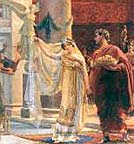 "In the days when it was common for poor folk to eat acorns (glans in Latin), walnuts were called Jovis glans, the nuts of Jove (Jupiter), king of the gods. Later, they came to be known as Juglans regia, or royal nut, and that remains its botanical name. In Roman times they were also known as Persian nuts for they may have been introduced to the empire by way of Persia. "
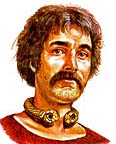 "An
"An 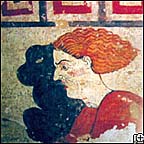 "Etruscan art, made of strange demons and monsters, is emerging in a Tuscan village, in what could be one of the most important discoveries of recent times, according to scholars who have seen the paintings."
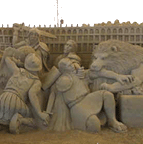 "I stumbled across this website and was amazed at the beauty of these sand sculptures depicting images of the Roman Empire. The city of Jesolo, Italy sponsors this sand sculpture competition each year with a different theme. I heartily approve of this year’s subject!
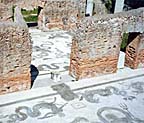 "Riverboats will return to ancient Rome's sea route for the first time in 200 years next week, giving tourists a view from the Tiber river to rival any of the Eternal City's attractions on dry land. The boats will ply a disused route along the green-tinged river from the edge of the city centre to the mosaic-filled ruins of Ostia Antica -- a two-hour trip away from the whizz of scooters and the pilgrims at St Peter's Square in the Vatican."
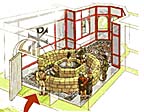 "The earliest private chapel from Dark Age Britain has been unearthed in the foundations of a Roman 'stately home'.
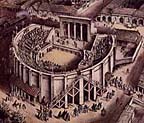 "Verulamium, a site treasured by archaeologists for years as a unique monument to Roman Britain, is now safe from destruction by the plough, thanks to an important agreement between English Heritage and the local landowner. The agreement, announced on October 22, will ensure that fields covering part of one of the country’s most important archaeological sites, near St.Albans, are taken permanently out of cultivation and converted to permanent pasture. Ancient hedgerows that had been removed to facilitate cultivation will be re-instated. "
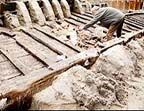 "Dutch archaeologists have discovered a Roman cargo ship equipped with oars, a unique find that explains how imperial Rome defended itself on its northern frontiers.
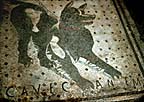 "The Roman empire became a melting pot of dogs from all its conquests. As in ancient Egypt, Roman dogs served in a variety of roles, from companions and guard dogs to vicious fighting dogs pitted against slaves and wild animals.
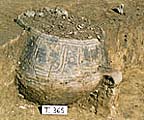 Dating between 1500 and 1200 B.C., a necropolis consisting of more than 2,000 tombs belonging to the people of the "terramare" — prehistoric flat-topped mounds left by a Bronze Age pile-dwelling settlement built on dry land, are being excavated near Modena, Italy.
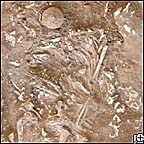 "Remains Of Xena-Like Woman Found: "The remains of a six-foot tall woman, buried with a shield and knife, were recently discovered in an Anglo-Saxon cemetery in Lincolnshire, England.
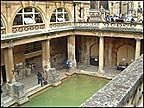 "Emergency work is under way in Somerset after water leaks at Roman baths were found to be destroying an artefact more than 1,700 years old. Stephen Clews, curator of the Roman baths, said: "It may seem odd that water should be a problem for a bath.
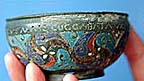 Although this item was posted in January, it only now came to my attention and I admired the artistry of the piece.
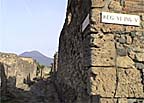 ""After three years of research, the Pompeii that Mount Vesuvius did not bury is coming to light, according to Italian archaeologists.
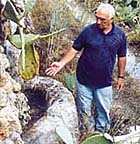 "What could be part of an olive press dating back to Roman times has been discovered embedded under a high rubble wall on the outskirts of Nadur.
 While I was skimming abstracts of different news items this week, I noticed
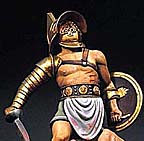 The largest collection of gladiator inscriptions known outside Rome have been discovered in an amphitheater in Cordoba. An archaeology professor at the University of Cordoba, Desiderio Vaquerizo said the amphitheater could hold up to 50,000 people. It is the third largest after the Colloseum in Rome and the amphitheater in the ancient Tunisian city of Carthage.
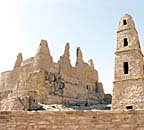 Al-Jouf, first mentioned in recorded history in the royal Annals of Assyria, when it was attacked by the Assyrian King Sennacherib in 688 BC, is the site of a discovery of Roman coins. The coins were unearthed on a hillside a few kilometers behind the Aramco oil terminal outside Sakaka. The regional capital of the northern province of Al-Jouf, Sakaka contains Saudi Arabia’s equivalent of Stonehenge. The cluster of sandstone stele, known as Al-Rajajil, have stood here for more than 6,000 years. Standing astride the trade routes from Syria and Iraq to Yemen, Syrian, Roman and Greek artifacts have all been found here.
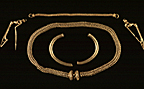 "They thought it had been made by skilled local craftsman in the last century before the Roman invasion. But scientific analysis of an Iron Age gold hoard found near Winchester in 2000 showed it was made by Roman or Hellenic craftsman between 70BC and 30BC," said Dr. Dick Whinney, curator of the British Museum.
 I have always loved the Greco-Roman mummy portraits from the Fayum region of Egypt and today stumbled across this wonderful site about them. Discovered in March, 1888 by Flinders Petrie, the site was termed 'an immense cemetery of Roman time with rooms brick-built tombales still containing the bodies of their owners'. He became quite emotional when he gazed on the first portrait still fixed to its mummy, 'a splendidly drawn girl, with sweet grey tints'. "
 Archaeologists digging at the ancient city of Antikythera have located sanctuaries, a large public building and a wealth of missiles — spear and arrow heads, slingshots and large catapult stones — in the settlement identified as the city of Aegila mentioned in ancient sources. Antikythera controlled the strait between Kythera and western Crete, a crucial passage for shipping.
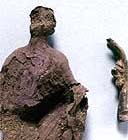 "Senua, a previously unknown Romano-British goddess, has been resurrected at the British Museum, patiently pried from soil-encrusted clumps of gold and corroded silver which have buried her identity for more than 1,600 years."
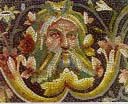 "New mosaics and frescos have been excavated from the ancient city of Zeugma located in Belkis Village 10 km east from Nizip town of southeastern Gaziantep province, by the River Euphrates."
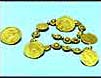 Five gold coins minted in Constantinople and a gold bracelet decorated with nine crosses have been unearthed by Hungarian archaeologists excavating a necropolis 45 kilometers west of Alexandria.
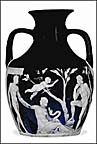 Dr Jerome Eisenberg, editor-in chief of ancient art and archaeology magazine Minerva, states in a recent issue that he is convinced that the Portland Vase, one of the most famous cameo-glass vessels from antiquity, was created during the Renaissance. It was thought to have been found in the tomb of Emperor Severus Alexander in 1582.
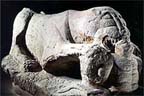 A white sandstone lioness statue unearthed by ferryman Robert Graham in the mud of the River Almond in 1997 is expected to form the centrepiece of a new £2 million interpretative center planned for Cramond, Scotland. Plans have also be proposed to restore the 1800-year-old Roman fort near Cramond Kirk and the nearby bath house.
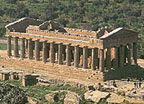 "Located on a plateau overlooking Sicily's southern coast, Agrigento was founded as Akragas around 582 BC by a group of colonists from Gela, who themselves were the immediate descendants of Greeks from Rhodes and Crete. Akragas was renamed Agrigentum by the Romans, and Girgenti by the Saracens, only to be christened Agrigento in 1927, but the place is the same.
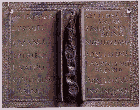 "Archaeologists have uncovered the earliest examination certificate ever found in Britain. Fragments of two bronze sheets, which had been threaded together, were unearthed by metal detector enthusiasts in Norfolk.
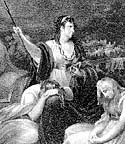 "Archaeologists from Wessex Archaeology found a small cremation cemetery from London's earliest years that had been severely disturbed some time before the 70s - the date is given by a coin overlying the site.
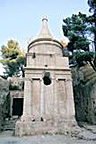 "For centuries passers-by have thrown rocks at an ornate tomb in Jerusalem's Kidron Valley, reviled as the traditional burial place of the biblical King David's villainous son Absalom.
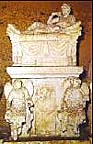 "Discovered entirely by accident in 1840 during road construction, the hypogeum in Perugia (2nd century BC), is the biggest of the 38 graves found in the surrounding Palazzone burial ground.
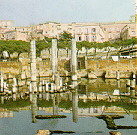 "Excavators at Pompeii, entombed in ash and toxic debris by the eruption of Mount Vesuvius in AD 79, were able to remove the volcanic material and expose the city to the open air.
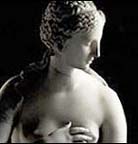 "The British Government has placed a temporary export ban on a Roman statue of Venus in the hope that it can be bought for the nation. The marble statue, described as being of "outstanding significance", has been dated to circa late 1st/mid-2nd Century AD and is a Roman copy of a Hellenistic original of 2nd Century BC. Known as Jenkins Venus, the statue, originally bought in Rome in 1765 , was resold at auction earlier in the year by an anonymous foreign buyer for a record £7.9m to pay for the refurbushiment of Newby Hall in North Yorkshire .
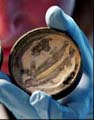 "For the ancient Romans, looking good didn't stop at applying makeup. Archaeologists have found tools such as tweezers for trimming the brows and small scoops for cleaning out the ears. The devices were likely used by both men and women, says Rosenberg."
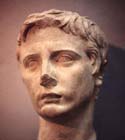 "The ancient palace in Rome that provided the backdrop for many of Emperor Caligula's wildest depravities has been found by British and American archaeologists. It has been located at the foot of the Palatine Hill, at a point where it met and joined the Temple of Castor and Pollux.