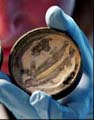
Excavators at the site of a major Roman temple in London have found a sealed box containing a white cream still bearing the fingermarks of the person who last used it, nearly 2,000 years ago. Museum conservator Liz Barham who opened the fist-sized cylindrical tin box for the first time on Monday, in front of the world's media, described the smell from the half-full container as "sulphurous" and "cheesy." The substance, which will now be chemically analyzed, could be face cream or even face paintsaid Museum of London curator Francis Grew.
William Smith, D.C.L., LL.D., in an article in
A Dictionary of Greek and Roman Antiquities of 1875 explains, "The practice of painting the face was very general among the Greek ladies, and probably came into fashion in consequence of their sedentary mode of life, which robbed their complexions of their natural freshness, and induced them to have recourse to artificial means for restoring the red and white of nature. This at the least is the reason given by some of the ancient writers themselves (Xen. Oecon. 10 c.10; Phintys, ap. Stobaeum, tit. lxxiv.61). The practice, however, was of great antiquity among the Greeks, and was probably first introduced among the Asiatic Ionians from the East, where the custom has prevailed from the earliest times. "
He continues, "In order to produce a fair complexion, cerussa, or white lead was employed. The eye-brows and eye-lids were stained black with a sulphuret of antimony, which is still employed by the Turkish ladies for the same purpose. The eye-brows were likewise stained with a preparation of soot.
Roman ladies even went so far as to paint with blue the veins on the temples, as we may infer from Propertius (ii.14.27) "si caeruleo quaedam sua tempore fuco tinxerit." The ridiculous use of patches (splenia), which were common among the English ladies in the reign of Queen Anne and the first Georges, was not unknown to the Roman ladies (Mart. ii.29.9, x.22; Plin. Ep. vi.2). The more effeminate of the male sex at Rome also employed paint. Cicero speaks (in Pison. 11) of the cerussatae buccae of his enemy, the consul Piso.
See also:
Fucus
Cosmetics were also valuable trade items:
I also came across
this reference:
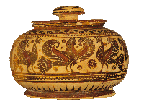
"From Homer's day forward, precious oils, perfumes, cosmetic powders, eye shadows, skin glosses and paints, beauty unguents, and even hair dyes seem to have been in near universal use. Export and sale of these items formed an important part of trade around the Mediterranean. During the 8th and 7th centuries BC, overseas markets were dominated by Corinthian, Rhodian and East Greek perfume flasks and cosmetic containers, including aryballoi, alabastra, pyxides and other small specialized shapes. Cosmetic unguents were imported into Greece in containers carved from the Red Sea Tridacna shell."
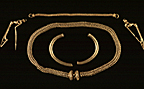 "They thought it had been made by skilled local craftsman in the last century before the Roman invasion. But scientific analysis of an Iron Age gold hoard found near Winchester in 2000 showed it was made by Roman or Hellenic craftsman between 70BC and 30BC," said Dr. Dick Whinney, curator of the British Museum.


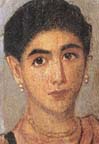 I have always loved the Greco-Roman mummy portraits from the Fayum region of Egypt and today stumbled across this wonderful site about them. Discovered in March, 1888 by Flinders Petrie, the site was termed 'an immense cemetery of Roman time with rooms brick-built tombales still containing the bodies of their owners'. He became quite emotional when he gazed on the first portrait still fixed to its mummy, 'a splendidly drawn girl, with sweet grey tints'. "
 Archaeologists digging at the ancient city of Antikythera have located sanctuaries, a large public building and a wealth of missiles — spear and arrow heads, slingshots and large catapult stones — in the settlement identified as the city of Aegila mentioned in ancient sources. Antikythera controlled the strait between Kythera and western Crete, a crucial passage for shipping.
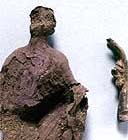 "Senua, a previously unknown Romano-British goddess, has been resurrected at the British Museum, patiently pried from soil-encrusted clumps of gold and corroded silver which have buried her identity for more than 1,600 years."
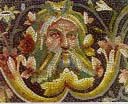 "New mosaics and frescos have been excavated from the ancient city of Zeugma located in Belkis Village 10 km east from Nizip town of southeastern Gaziantep province, by the River Euphrates."
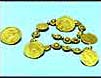 Five gold coins minted in Constantinople and a gold bracelet decorated with nine crosses have been unearthed by Hungarian archaeologists excavating a necropolis 45 kilometers west of Alexandria.
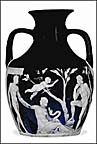 Dr Jerome Eisenberg, editor-in chief of ancient art and archaeology magazine Minerva, states in a recent issue that he is convinced that the Portland Vase, one of the most famous cameo-glass vessels from antiquity, was created during the Renaissance. It was thought to have been found in the tomb of Emperor Severus Alexander in 1582.
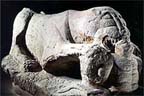 A white sandstone lioness statue unearthed by ferryman Robert Graham in the mud of the River Almond in 1997 is expected to form the centrepiece of a new £2 million interpretative center planned for Cramond, Scotland. Plans have also be proposed to restore the 1800-year-old Roman fort near Cramond Kirk and the nearby bath house.
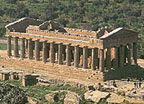 "Located on a plateau overlooking Sicily's southern coast, Agrigento was founded as Akragas around 582 BC by a group of colonists from Gela, who themselves were the immediate descendants of Greeks from Rhodes and Crete. Akragas was renamed Agrigentum by the Romans, and Girgenti by the Saracens, only to be christened Agrigento in 1927, but the place is the same.
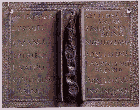 "Archaeologists have uncovered the earliest examination certificate ever found in Britain. Fragments of two bronze sheets, which had been threaded together, were unearthed by metal detector enthusiasts in Norfolk.
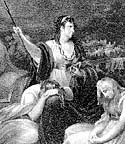 "Archaeologists from Wessex Archaeology found a small cremation cemetery from London's earliest years that had been severely disturbed some time before the 70s - the date is given by a coin overlying the site.
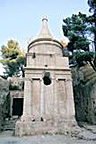 "For centuries passers-by have thrown rocks at an ornate tomb in Jerusalem's Kidron Valley, reviled as the traditional burial place of the biblical King David's villainous son Absalom.
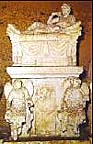 "Discovered entirely by accident in 1840 during road construction, the hypogeum in Perugia (2nd century BC), is the biggest of the 38 graves found in the surrounding Palazzone burial ground.
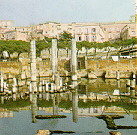 "Excavators at Pompeii, entombed in ash and toxic debris by the eruption of Mount Vesuvius in AD 79, were able to remove the volcanic material and expose the city to the open air.
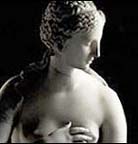 "The British Government has placed a temporary export ban on a Roman statue of Venus in the hope that it can be bought for the nation. The marble statue, described as being of "outstanding significance", has been dated to circa late 1st/mid-2nd Century AD and is a Roman copy of a Hellenistic original of 2nd Century BC. Known as Jenkins Venus, the statue, originally bought in Rome in 1765 , was resold at auction earlier in the year by an anonymous foreign buyer for a record £7.9m to pay for the refurbushiment of Newby Hall in North Yorkshire .
 "For the ancient Romans, looking good didn't stop at applying makeup. Archaeologists have found tools such as tweezers for trimming the brows and small scoops for cleaning out the ears. The devices were likely used by both men and women, says Rosenberg."
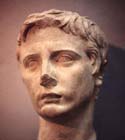 "The ancient palace in Rome that provided the backdrop for many of Emperor Caligula's wildest depravities has been found by British and American archaeologists. It has been located at the foot of the Palatine Hill, at a point where it met and joined the Temple of Castor and Pollux.
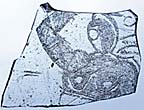 A small piece of fine glass, engraved or etched with the figure of a gladiator is one of the most exciting finds this year at the Whitehall Farm Roman Villa and Landscaping Project. Part of a drinking vessel, it was found in the sealed context of room 3B of the bath house.
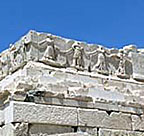 A beautiful frieze of dancing girls that adorns the NW Heroon, an honorific monument, dedicated to a prominent figure of the city and built in Augustan times (25 B.C.-A.D. 14), has been freed of its winter protection. A new study of the naiskos (platform) blocks indicated that almost nothing was missing of the latter. Also, it turned out that it was not a distylos in antis (two columns set between projecting side walls), but a tetrastyle prostylos (four columns set in front of the cella) shrine built in the Corinthian order.
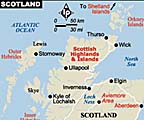 A Roman brooch, dated to between 50BC and 50AD, has been discovered by amateur archaeologists in Shetland. The ancient pin could have belonged to an islander returning to the area around Norwick on Shetland after serving in the Roman army.
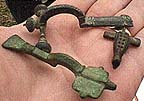 Digs sponsored by The Weekend Wanderers Detecting Club, founded by Peter Welch in 1997, have yielded an impressive variety of early Roman and Saxon brooches. Weekly digs take place in and around Hertfordshire, Buckinghamshire, Berkshire, Hampshire, Surrey, and Oxfordshire in the UK.
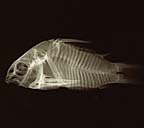 Fish fossils found in an excavation of Sagalassos, 110 kilometres inland from Turkey's southern Mediterranean coast, have added to growing evidence that Sagalassos had connections with far-flung regions of the Roman Empire. 1400-year old remains of an Egyptian catfish dinner were identified by genetic analysis.
 Michael Scarpitti has designed some unique fonts "based on historical sources from different eras of the Roman Empire and are extraordinarily accurate to the details of the different lettering styles which they represent. These are not modernized abstractions of popular styles like Rustica and Roman Uncial, but grittier, more interesting designs derived directly from ancient manuscripts and inscriptions. This is Roman lettering as it was actually done, not a contemporary designer's reinterpretation."
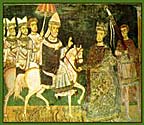 In the fourth century AD, the fragmented Roman Empire was being further torn apart by civil war. Constantine and Maxentius were bitterly fighting to be the sole emperor.
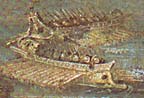 Academics have long argued that holding sea battles at the Colosseum was impossible . But, Cassius Dio, chronicler of ancient Rome, said: "Titus suddenly filled this same theatre with water and brought in horses and bulls and other domesticated animals that had been taught to behave in the liquid element just as on land. He also brought in people on ships, who engaged in a sea-fight there, impersonating the Corcyreans and Corinthians."
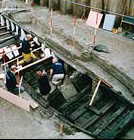 Although silted over centuries ago, a Roman barge that has stayed waterlogged for nearly 2,000 years, preserving the vessel and its contents, has been raised from the bottom of the Rhine River near the city of Utrecht. It is 25 metres long and 2.7 m wide, and is the first to be found with a cabin containing an entire inventory of items that have been fully preserved--from the captains kitchen, bed and chest, down to the contents of his cupboard.
 A giant cathedral in eastern Germany known to have been built by Holy Roman Emperor Otto the Great in the 10th Century has been unearthed in Magdeburg. Laden with Italian marble, glass mosaic stones and glazed wall tiles--remains of which were all found at the site--the romanesque cathedral was as extraordinary in its beauty as in its size.
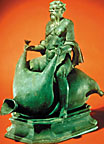 "The Greeks, the Etruscans and the bane of them both, the Romans, are now part of an integrated exhibition called "Worlds Intertwined." Unlike the ancient glamour pieces one finds at museums such as the Metropolitan (the best statues and ceramics that money and pillage could assemble), the universitys museum is more terrestrial, yet, argues its director, Jeremy A. Sabloff, no less valuable for scholarly purposes." The Washington Post
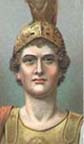 Bulgarian archeologists believe they may have found one of the most famous oracles of antiquity, a Thracian temple of Dionysus, in the mountains of southern Bulgaria. Combing through the site of the ancient village of Perperikon in the Rhodope mountain chain, archaeologists found an oval hall that had no roof but a round altar carved out of the rock. This matches a description of the oracle by the Roman historian Suetonius. Nikolai Ovtcharov, the head of the archeology team, pointed out that this sanctuary is as important as that of Apollo at Delphi, "It is where Alexander the Great heard before he embarked on his conquest of Asia that he would become master of the world."
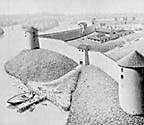 Founded by Octavian after his triumph in the Battle of Actium in 31 BC and decisive defeat of his opponents, Mark Antony and Cleopatra. Nicopolis, the city of Nike, or Victory, developed over the next 10 centuries into the leading urban center in northwestern Greece. The inhabitants of the neighbouring cities of Epirus, Leucas, and Acarnania were forced to settle in this area. The city enjoyed special political and financial privileges, had its own mint and every four years celebrated the Actia, festivals including athletic, musical and racing contests. Many intellectuals of the period, such as Epictetus (A.D. 89) gathered in Nikopolis. The city was sacked by the Goths in the fourth century then restored by Justinian in the fifth century. It was inhabited through the Byzantine period.
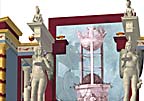 The remains of Pompeiis ancient villas show that the Romans decorated their villas with extravagant wall paintings of theatre scenes that used tricks of perspective to impress guests with what seemed at the time an early version of virtual reality. Now, researchers at the University of Warwick are transforming these ancient forms of perspective painting into the 21st century version of virtual reality using 3-D digital models that allow viewers to tread the boards of long-lost Roman theatres.
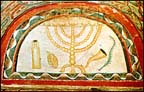 Newly uncovered catacombs near Venosa, Italy are yielding artifacts from a settlement of Jewish prisoners brought to Italy in the first century C.E. Dr. Cesare Colafemmina, visiting professor of Hebrew and Hebraic literature at the University of Calabria, said documents indicate that Emperor Titus brought 5,000 captives to the region after the destruction of the Second Temple in Jerusalem in A.D. 70. Hundreds more are thought to have settled here before and after that time, simply because it was a prosperous crossroads of maritime trade. And Jews played a vital role in Mediterranean commerce. By the end of the fourth century many towns were dominated by Jews. They even became political and community leaders, he added.
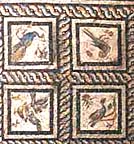 Monumental red-brick baths dating from the fourth century with an adjoining cistern, and a small theatre with marble tiers of the same period have been found by a Polish team at Kom Al-Dikka near Alexandria. Both buildings opened to the west into a large open space lined with columns, the agora of late antique Alexandria. Residences of the wealthy inhabitants of the city lined the streets originally laid down by Alexander and his heirs, and while the houses of the earlier Ptolemaic period are hardly accessible, the later ones, with wall paintings and fine mosaic floors have been preserved, and, as in the third century Roman "Villa of the Birds" discovered earlier, restored. During the sixth century, the eastern side of the agora underwent reconstruction and a succession of meeting rooms were built within the colonnade. The theatre was also transformed: a dome was constructed over the tiers of steps, thus creating a huge lecture hall in line with the smaller rooms.
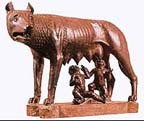 According to Romes Il Messaggero newspaper, a fragment of writing by the Graeco-Sicilian poet Stesichorus (638-555 BC) recounts how a woman named Roma arrived with a Trojan fleet in an idyllic place that could easily be Rome. The scene was described as one of enchanting beauty, where before the setting sun the visitor was "enticed to dream while being caressed by the off-shore breeze".
 In a walled vineyard in the shadow of Pompeiis splendid amphitheatre, Pietro Mastroberardino has produced a wine which is "very intense and with a nice fruity bouquet" from the original vines grown within the walls of the ancient city. "We used different techniques but the same technology, and for the nose and the mouth this has the same result," said the winemaker.
 Painted or engraved bulls on the walls of paleolithic caverns suggest that from prehistoric times, the bull was associated with cosmic energy and the forces of life and death. In Anatolia, the bull was worshiped as the son of the mother-goddess, and its horns, which supported the world, were seen as the pillars of the universe.
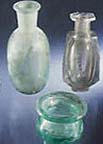 "Lily, rose, basil and fennel are just a few of the heady scents that once fired the imaginations of ancient Romans," said Anna Maria Ciarallo, head of biological research at Pompeii. "Finally, and based on scientific research, we can give Pompeii back some of its fragrance."
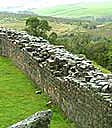 An 84-mile footpath along Hadrians Wall, from Segedunum fort at Wallsend in the east to Bowness-on-Solway, west of Carlisle, is now open for visitors.
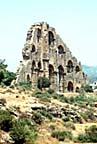 Charles Ortloff and Adonis Kassinos of the private company CTC/United Defense in Santa Clara, California have suggested that a series of gradient increases and decreases constructed in the aqueduct at Aspendos, Turkey were designed to prevent "slosh" and resulting damage to the ancient pipeline. They also speculated that little holes, about 3 centimetres wide, that perforate some of the pipeline's blocks, were designed to reduce turbulence in the flow by letting air and water escape.
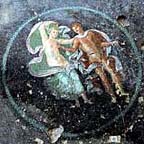 A pair of 2,000-year-old frescoes were stolen from the "House of the Chaste Lovers" in Pompeii. The thieves hacked off a fresco of a cherub and another with a rooster pecking at an apple.
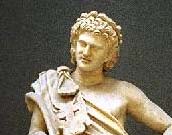 A 2,500-year-old bronze statue of a dancing satyr went on public display inside Italys parliament in Rome five years after its recovery by Sicilian fishermen. Reuters reports: "The satyr is missing both arms and one leg, but the head and torso are remarkably well-preserved despite centuries spent at the bottom of the sea. With its head tilted at a jaunty angle, curly hair flying and remaining leg suggesting it is in mid-leap, the two-meter tall satyr cuts a striking figure."
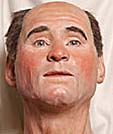 The only complete skull of a Roman militiaman to be discovered in Scotland has been used by medical experts to reconstruct the face of a 45-year-old veteran whose body ended up at the bottom of a well 2000 years ago. The soldier appeared to be of Germanic or Gallic origin. Dr John Reid, a consultant radiologist at Borders General Hospital, said: "Some people think he may have been an executed prisoner, but if so why would they throw him down a well and risk poisoning the water supply? It seems more likely he was returning from a night at the tavern, and simply fell down the well."
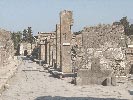 Pompeii is well known for its rich archaeological record sealed by volcanic deposits in A.D. 79. But what was the history of the city and its inhabitants before this date? The Anglo-American Project in Pompeii (AAPP), sponsored by the University of Bradford in England, is answering this question through scholarly research and at the same time is training future archaeologists and historians in the latest scientific field techniques.
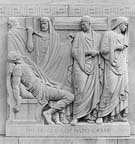 TV documentary scheduled to air today features an investigation by Colonel Luciano Garofano who suggests Caesar, through failing health, committed suicide, and orchestrated his impending murder to his advantage. He changed his will six months earlier so Marc Anthony would not succeed him on the throne, and in his place put nephew Octavian.
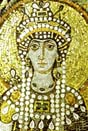 For the first time, an exhibit at Harvards Sackler Museum explores the world of Byzantine women: how they adorned their bodies, occupied their days, decorated their homes, and soothed their fears. Past exhibitions of Byzantine art have focused on the spirituality or imperial splendor of the Byzantine world including women only as empresses and saints. This exhibition will initiate a fresh discourse on women in Byzantium by displaying a variety of works of art and other objects and images related to them and their everyday lives.
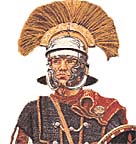 Using a specially-designed camera mounted on a helicopter along with site archaeologists and costumed reenactors, film makers at the Vindolanda Trusts Roman Army Museum at Greenhead in Northumberland have recreated 3rd century Roman Britain. The film is displayed in a new theater financed by a Heritage Lottery Fund grant. With the sites low ruins transformed by live action costumed shots intermingled with computer-generated graphics, visitors can see what life was really like at Roman forts like Vindolanda and others along Hadrians Wall.
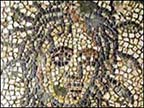 If enough money is not raised to replace a 100-year-old metal roof over the mosaics of Brading Roman Villa on the Isle of Wight, A spokesman for Oglander Roman Trust says the 4th century artworks discovered by Captain John Thorp, a former soldier in the British Army in India, in 1880, will have to be reburied to protect them.
 "Her perfectly preserved skeleton told us that she was young and slender while oxygen isotopes locked within her teeth showed that she was born not in Britain but in warmer, Mediterranean lands. Dressed in silk and gold, her head on a pillow of bay leaves and lying in a decorated lead coffin, she took with her on the final journey to the underworld her trappings of worldly wealth, vessels and ornaments of glass and jet."
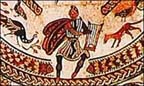 The Orpheus pavement, which lies buried deep beneath Woodchester churchyard, was part of a fourth century Roman villa and at more than 2,200 square feet in size is believed to be the largest surviving mosaic in Northern Europe. But, damaged by fire and grave-digging above it, the mosaic may never be put on public view again.